
17.08.2020
Veronika Bulavitskaya: “Any Crisis or Failure Is an Opportunity to Change Your Life for the Better”
Veronika Bulavitskaya is a business trainer, personal and team coach, and NLP master.
For nearly 20 years, Veronika has held key positions at international airlines such as Lufthansa and Air Astana, among others. She holds two university degrees and continuously pursues further professional development in her passion. She is also a devoted mother and avid traveler who has visited 75 countries.
In an interview with VITAGURU, she shared how she discovered coaching, how she overcame professional burnout, and why she believes any crisis or failure is an opportunity to improve one’s life.

Veronika, tell us about yourself. What are you doing now?
I have almost 20 years of expertise in the aviation industry, with a brief hiatus.
During that break, I studied coaching and NLP. I completed the four-module program at the International Erickson Coaching University and trained under Marilyn Atkinson, Robert Dilts, Stephen Gilligan, and Frank Pucelik—the founders and developers of the method.
When I was 18, I didn’t know what I wanted to do, but I knew I wanted to travel, so I chose the aviation industry.
How did you realize you wanted to become a coach?
I turned to coaching when I experienced severe professional burnout. It was 2015, and I was Commercial Director at Aeroflot. My daughter was born, and I tried to excel 100 % at both motherhood and my career. I had no time for myself, yet I couldn’t admit I wasn’t managing. That led to emotional exhaustion.
Leaving my job felt like giving up, which I refused to do. When the Ukrainian government banned Aeroflot flights to Ukraine, I actually felt relief.
I had reached an internal dead end and needed to stop for a while to figure things out. I didn’t know what I wanted to do next, but I was certain I wouldn’t return to aviation. I spent six months in that state.
A friend who is an HR expert recommended coaching as a new approach to management and business. I studied it to boost my own skills, with no intention of working in the field.
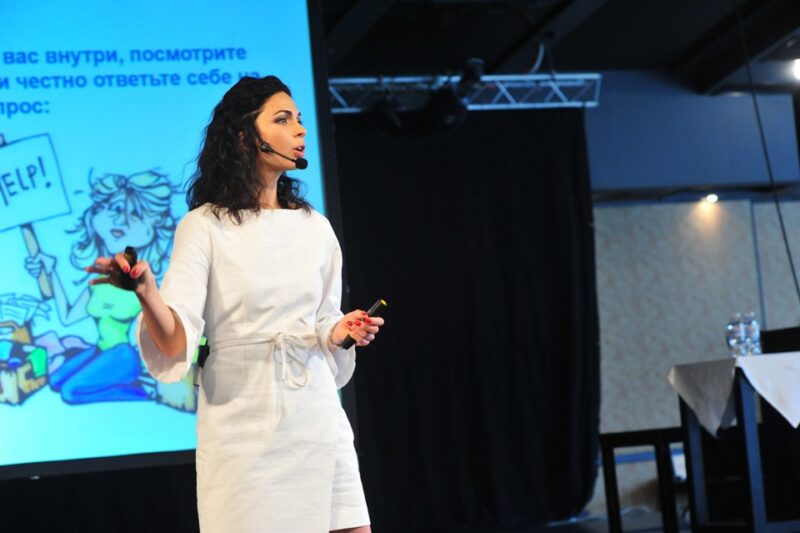
Tell us about your first steps in the new profession
My entire life has been a journey of self-discovery. I always understood that we’re responsible for what happens to us, but I lacked the tools to truly influence it. Coaching provided that missing link.
The first workshop I attended was “Quantum Mind” by physicist Peter Stefani, about how our brain works, how we make decisions, and how we create our reality from a quantum physics perspective.
I became passionate about coaching and continued my studies. To certify with Erickson Coaching International, I had to complete 25 hours of practical client work. That was a real challenge. By engaging with people in this new role, I explored my own depths.
When I started seeing results, I became even more convinced. After two modules, I worked with a friend who, by the fifth session, told me she’d stopped taking antidepressants. That proved to me how powerful the method is.
I then certified as an NLP Master, finished a trainer training with Marilyn Atkinson, and studied with Robert Dilts. Everything developed rapidly, and within a year I was leading workshops. I joined the Vision Breakfast project by Marysia Gorobets as a speaker at her first session. Marysia was one of my first clients and attended all my trainings, just as I attended all her Breakfasts. We went on to create many joint projects, for which I’m immensely grateful.

Is coaching your main focus now? Do you consider it your calling?
Today coaching is a parallel activity. I work with issues like phobias, various dependencies, and weight problems. At the root of these issues lies an internal conflict: on one side a desire to change (lose weight, start exercising, quit smoking), on the other an unexplored, shadow part. That unwanted behavior carries a “positive intention”—a function that the person fulfills through the habit. Until that intention is brought to light and met, change is very difficult.
A year ago I divorced and returned to aviation—Air Astana invited me to join them. After much thought, I accepted, and that has become my primary role.
How do you manage two such different professions?
We live in a time when people can pursue multiple careers. I continue learning in both coaching and aviation. I’ve stopped running group workshops and now focus solely on individual clients.
At Lufthansa, over 12 years, I worked in everything from simple service functions—ticket sales, passenger check-in, crisis management—to designing market-wide sales strategies. I became an expert in service and customer care.
Now I aim to combine that expertise with coaching. For example, I developed a service workshop founded on the idea that every sale is service and every service is a sale. If a sale doesn’t lead to a repeat sale, the service didn’t meet the client’s needs. True service includes post-sale care. A common mistake is selling as you’d like to buy; instead, you must sell as the client wishes to buy.
How do you set priorities to manage time and resources?
I believe that to balance all areas of life, you must first do what you enjoy. You can’t truly manage time—it’s precious and irretrievable. What you can manage is your focus of attention, which requires an internal system.
I advocate flexible systems, because rigid frameworks stifle mobility and sensitivity to external changes.
In truth, there is always enough time for what matters. If you lack time for something, it means it isn’t truly important to you. When you follow what you love and derive pleasure from it, your time naturally aligns to accommodate it.
How do you cope with life’s challenges? What motivates you?
-
Crying when needed. I tell clients, “cry as much as you need.” Emotions must be experienced, accepted, and released, not stored. We feel, release, and move on.
-
Laughing at myself. Some crises can only be survived by laughing at yourself and letting go. I encourage clients to do the same.
-
Staying present. For example, the lockdown benefited me—I worked more with clients and spent more time with my daughter. Being present doesn’t mean forgetting the past or not planning the future; it means separating those thoughts from the reality of now. The key is focusing on what you have and what you’d like to add to move toward your goals.
Whenever something is missing—work, a partner, a child—you gain something else: free time, the chance to travel, time for yourself. I train myself to see the world this way.

How should goals be set—long‑term strategy or small steps?
Each person has their own strategy. What works for me may not suit another. No one is aimless or talentless; we simply have suppressed elements that coaching “unpacks,” allowing things to fall into place.
First, the goal must matter deeply to the person. Then we work through each stage: the goal must be controllable, achievable, measurable, and time‑bound. In coaching, we also create a vision—the larger “why” behind the goal—and break the path down into small steps.
Naturally, at each stage fears arise—fear of dreaming, failure, rejection by the system, or even fear of completion, which is paradoxical. At every step, we test commitment. True commitment can only exist where there is genuine importance.
In self‑realization, what’s most important: success or learning from failures?
Once someone decides to realize something in the world, they inevitably meet external resistance. Failures and problems are part of the process. Success—even financial—depends less on the absence of problems and more on our attitude toward them.
Our attitude matters most; solutions always exist. No one glides through change effortlessly; we all experience fear, anger, and disappointment.
The world is a vast system, and everything that happens has meaning. In all events there is a positive intention for each person. Coaching always operates positively; one function of the coach is to support the client’s self‑belief.
The core principles of Milton Erickson’s coaching are:
-
Everyone is okay; we are simply different. Society’s narrow success template stifles motivation.
-
Every intention is positive; many don’t know how to realize it ecologically because emotional intelligence and awareness aren’t taught.
-
We always make the best choice available given our level of awareness. Even if it’s not ecological, it’s the best in that moment.
-
Everyone has the resources needed for their goals; energy follows focus.
-
Change is inevitable and therefore possible.

How to handle failures without stopping halfway?
It’s crucial to redefine “failure.” If you try something new and it succeeds immediately, you’ve done something old—what you already knew. When you do something you’ve never done, mistakes are guaranteed. People often view such errors negatively, but they’re necessary experiences to welcome. In self‑realization, you attempt the new; the setbacks are part of the journey.
Any crisis or failure is like rocket fuel. It’s a springboard, a space for growth. I wholeheartedly embrace crises, seeing them as signals of our inner call for change.
What goals are you setting now? Plans for the future
I never tie myself to just one path. Today I’m an aviation expert and a coach, but I can become passionate about something else, and it will become my work. I don’t know what tomorrow holds, but I have expertise in various fields that I want to integrate.
I see great potential for NLP and coaching in education—both universally and individually. The method shifts relationships from competition to cooperation, from opposition to acceptance, from resistance to curiosity. It’s fundamentally about enabling greater awareness. That’s the direction I intend to develop further.
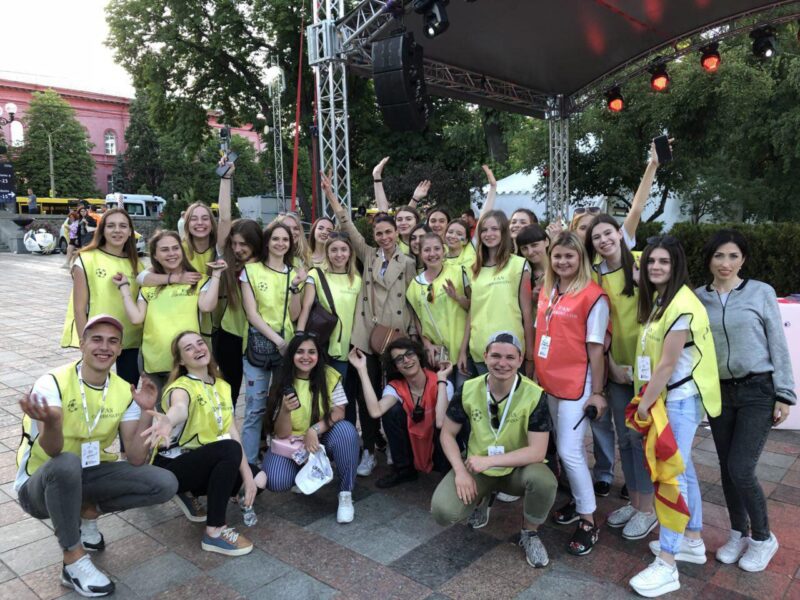
For example, in 2018 I coordinated a project working with Real Madrid and Liverpool fans during the UEFA Champions League final in Kyiv. The team included 200 people and three team leaders. We used a “horizontal” management system—each person made independent decisions within their area and took 100 % responsibility. The results were excellent.
On a global scale, I’d like these tools integrated into schools and universities so they’re accessible to as many people as possible.
I also plan to earn my pilot’s license—I’ve already found a flight school. I can’t yet say I’ll become a pilot professionally, just as I never predicted I’d become a coach, but I embrace the journey.
Cover photo – Yaroslav Troshin
Articles


What is the energy of life?
We identified 12 main areas in life of each person, the qualitative improvement of each will fill your life with energy and harmony: health, family, time, spirituality, hobbies, beauty, environment, space, well-being, nutrition, lifestyle and self-realization.
Health
Health is when every day is the best. – Franklin Adams
Beauty
Beauty is in everything, but not everyone is given to see it. – Confucius
Nutrition
Thou shouldst eat to live; not live to eat. – Socrates
Home
There is no place more delightful than one’s own domestic space. – Cicero Mark Tullius
Family
Everyone is always someone's child. – Pierre Augustin Beaumarchais
Lifestyle
Staying yourself is the easiest and most worthy lifestyle no matter what others think of you. – Mrinal Kumar Gupta
WANT TO STAY INFORMED ABOUT EVERYTHING?
Sign up for our mailing. You will like it. We promise to write rarely and about important things.